

Reduce Energy Use
June 24, 2009 by carbonday
Filed under At Workplace
How to Reduce Energy Use at Work
In order to make your workplace more environmentally friendly you can make suggestions about how to improve electricity conservation, water usage, and even furniture sources. The U.S. Green Building Council’s Leadership in Energy and Environmental Design (LEED) program can provide information about environmentally friendly buildings.
You can find information about your building from the owner, maintenance or operations department or from the person responsible for those issues in your company. Make clear that you’re doing research to help make the workplace a better place for all and don’t imply any criticism — these are the folks who will implement (or subvert) any green practices the building management adopts.
Actions to consider suggesting include the following:
· Switch to highly rated energy-efficient appliances. The federal government’s Energy Star program rates appliances.
· Schedule regular maintenance and service for heating and air conditioning systems, and fit them with timers so that they’re in use only when people are in the office.
· Change electricity suppliers to those sourcing power from green initiatives.
· Install water-saving taps, showerheads, and low-flush or dual-flush toilets.
· Install hand dryers rather then a paper towel dispenser. While it uses more electricity it cuts down on the numbers of trees needed to supply the paper.
· Take advantage of natural lighting, and install task lighting and high-efficiency compact fluorescent lighting.
· Install blinds and shutters on windows to block out direct sun and reduce the need for air conditioning in the summer and to let sun and light in during winter. Blinds and shutters can reduce energy costs because less electricity or other fuels are used to cool the premises in summer and to heat the premises in winter.
· Make sure that all equipment is turned off at the end of the day rather than left on standby.
· Arrange for the last person out of the office each day to turn out the lights, or have an electrician put the lights on a motion-sensor timer that switches them off when there has been no movement in a room for a certain amount of time.
· Equip the office kitchen with a fridge, a kettle, and perhaps a toaster oven or microwave so that people can easily reheat food that they bring from home. The availability of these appliances reduces the need to drive somewhere off-site for meals which in turn reduces our carbon footprint and helps employees maintain a healthy diet if workplaces aren’t close to restaurants that offer healthy alternatives.
· Give everyone their own mug (or ask them to bring in their own), and remind them to save electricity by not boiling more water in the kettle than they need each time for hot beverages. There are now one cup coffee and vending machines that will keep the costs down as well as conserve the water usage. Ask your purchasing person to ask the vendor.
· In the winter, turn the thermostat down slightly, and ask people to wear sweaters or jackets. In the summer, set the air conditioning temperature slightly higher, use fans, and ask people to dress accordingly. Somebody is always too cold or too hot so by doing this they will know to bring the proper attire to work.
· Use the recycling facilities available, including the usual glass, newspaper, cardboard, plastic, and paper options, plus any others, and ask if grants or other incentives are available for taking energy efficiency measures.
Use Green Buildings
June 24, 2009 by carbonday
Filed under At Workplace
Buildings account for one-sixth of the world’s fresh water withdrawals, one-quarter of its wood harvest, and two-fifths of its material and energy flows (Roodman and Lenssen, 1995). Building “green” is an opportunity to use our resources efficiently while creating healthier buildings that improve human health, build a better environment, and provide cost savings
What does it mean to Build Green?
A green building, also known as a sustainable building, is a structure that is designed, built, renovated, operated, or reused in an ecological and resource-efficient manner. Green buildings are designed to meet certain objectives such as protecting occupant health; improving employee productivity; using energy, water, and other resources more efficiently; and reducing the overall impact to the environment.
What Are the Economics of Green Buildings?
A green building may cost more up front, but saves through lower operating costs over the life of the building. The green building approach applies a project life cycle cost analysis for determining the appropriate up-front expenditure. This analytical method calculates costs over the useful life of the asset.
These and other cost savings can only be fully realized when they are incorporated at the project’s conceptual design phase with the assistance of an integrated team of professionals. The integrated systems approach ensures that the building is designed as one system rather than a collection of stand-alone systems.
Some benefits, such as improving occupant health, comfort, productivity, reducing pollution and landfill waste are not easily quantified. Consequently, they are not adequately considered in cost analysis. For this reason, consider setting aside a small portion of the building budget to cover differential costs associated with less tangible green building benefits or to cover the cost of researching and analyzing green building options.
Even with a tight budget, many green building measures can be incorporated with minimal or zero increased up-front costs and they can yield enormous savings(Environmental Building News, 1999).
What Are the Best Elements of Green Buildings?
Below is a sampling of green building practices.
Preparing the site
- Start by selecting a site well suited to take advantage of mass transit.
- Protect and retain existing landscaping and natural features. Select plants that have low water and pesticide needs, and generate minimum plant trimmings. Use compost and mulches. This will save water and time.
- Recycled content paving materials, furnishings, and mulches help close the recycling loop.
Energy Efficiency
Most buildings can reach energy efficiency levels far beyond California Title 24 standards, yet most only strive to meet the standard. It is reasonable to strive for 40 percent less energy than Title 24 standards. The following strategies contribute to this goal.
- Passive design strategies can dramatically affect building energy performance. These measures include building shape and orientation, passive solar design, and the use of natural lighting.
- Develop strategies to provide natural lighting. Studies have shown that it has a positive impact on productivity and well being.
- Install high-efficiency lighting systems with advanced lighting controls. Include motion sensors tied to dimmable lighting controls. Task lighting reduces general overhead light levels.
- Use a properly sized and energy-efficient heat/cooling system in conjunction with a thermally efficient building shell. Maximize light colors for roofing and wall finish materials; install high R-value wall and ceiling insulation; and use minimal glass on east and west exposures.
- Minimize the electric loads from lighting, equipment, and appliances.
- Consider alternative energy sources such as photovoltaics and fuel cells that are now available in new products and applications. Renewable energy sources provide a great symbol of emerging technologies for the future.
- Computer modeling is an extremely useful tool in optimizing design of electrical and mechanical systems and the building shell.
Materials Efficiency
- Select sustainable construction materials and products by evaluating several characteristics such as reused and recycled content, zero or low off gassing of harmful air emissions, zero or low toxicity, sustainably harvested materials, high recyclability, durability, longevity, and local production. Such products promote resource conservation and efficiency. Using recycled-content products also helps develop markets for recycled materials that are being diverted from California’s landfills, as mandated by the Integrated Waste Management Act.
- Use dimensional planning and other material efficiency strategies. These strategies reduce the amount of building materials needed and cut construction costs. For example, design rooms on 4-foot multiples to conform to standard-sized wallboard and plywood sheets.
- Reuse and recycle construction and demolition materials. For example, using inert demolition materials as a base course for a parking lot keeps materials out of landfills and costs less.
- Require plans for managing materials through deconstruction, demolition, and construction.
- Design with adequate space to facilitate recycling collection and to incorporate a solid waste management program that prevents waste generation.
Water Efficiency
- Design for dual plumbing to use recycled water for toilet flushing or a gray water system that recovers rainwater or other nonpotable water for site irrigation.
- Minimize wastewater by using ultra low-flush toilets, low-flow shower heads, and other water conserving fixtures.
- Use recirculating systems for centralized hot water distribution.
- Install point-of-use hot water heating systems for more distant locations.
- Use a water budget approach that schedules irrigation using the California Irrigation Management Information System data for landscaping.
- Meter the landscape separately from buildings. Use micro-irrigation (which excludes sprinklers and high-pressure sprayers) to supply water in nonturf areas.
- Use state-of-the-art irrigation controllers and self-closing nozzles on hoses.
Occupant Health and Safety
Recent studies reveal that buildings with good overall environmental quality can reduce the rate of respiratory disease, allergy, asthma, sick building symptoms, and enhance worker performance. The potential financial benefits of improving indoor environments exceed costs by factor of 8 and 14 (Fisk and Rosenfeld, 1998).
Choose construction materials and interior finish products with zero or low emissions to improve indoor air quality. Many building materials and cleaning/maintenance products emit toxic gases, such as volatile organic compounds (VOC) and formaldehyde. These gases can have a detrimental impact on occupants’ health and productivity.
Provide adequate ventilation and a high-efficiency, in-duct filtration system. Heating and cooling systems that ensure adequate ventilation and proper filtration can have a dramatic and positive impact on indoor air quality.
Prevent indoor microbial contamination through selection of materials resistant to microbial growth, provide effective drainage from the roof and surrounding landscape, install adequate ventilation in bathrooms, allow proper drainage of air-conditioning coils, and design other building systems to control humidity.
Building Operation and Maintenance
Green building measures cannot achieve their goals unless they work as intended. Building commissioning includes testing and adjusting the mechanical, electrical, and plumbing systems to ensure that all equipment meets design criteria. It also includes instructing the staff on the operation and maintenance of equipment.
Over time, building performance can be assured through measurement, adjustment, and upgrading. Proper maintenance ensures that a building continues to perform as designed and commissioned.
Steps to Ensure Success
- Establish a vision that embraces sustainable principles and an integrated design approach.
- Develop a clear statement of the project’s vision, goals, design criteria, and priorities.
- Develop a project budget that covers green building measures. Allocate contingencies for additional research and analysis of specific options. Seek sponsorship or grant opportunities.
- Seek advice of a design professional with green building experience.
- Select a design and construction team that is committed to the project vision. Modify the RFQ/RFP selection process to ensure the contractors have appropriate qualifications to identify, select, and implement an integrated system of green building measures.
- Develop a project schedule that allows for systems testing and commissioning.
- Develop contract plans and specifications to ensure that the building design is at a suitable level of building performance.
- Create effective incentives and oversight.
For More Information
- California Integrated Waste Management Board Green Building Web site: www.ciwmb.ca.gov/GreenBuilding/. Includes the manual Designing With Vision: A Technical Manual For Material Choices In Sustainable Construction (Pub. #431-99-009). Hard copies are available from the publications clearinghouse at 1-800-CA-WASTE.
- Sustainable Building Technical Manual, http://www.sustainable.doe.gov/freshstart/articles/ptipub.htm
- A Guide to Irrigation Water Needs of Landscape Plants in California: www.dpla.water.ca.gov/urban/conservation/landscape/wucols/
- Department of Health Services, Indoor Air Quality Web site: www.cal-iaq.org
- U.S. Department of Energy Web site: www.sustainable.doe.gov/buildings/gbintro.shtml
- Environmental Building News: www.buildinggreen.com/
- U.S. Green Building Council Web site: www.usgbc.org
You may also order a hard copy of this publication from the catalog.
References
- D.M. Roodman and N. Lenssen, A Building Revolution: How Ecology and Health Concerns are Transforming Construction, Worldwatch Paper 124, Worldwatch Institute, Washington, DC, March 1995, p. 5.
- Environmental Building News, Building Green on a Budget, Vol 8, No. 5, May 1999, www.ebuild.com/Archives/Features/ Low_Cost/Low_Cost.html#General
- William Fisk and Arthur Rosenfeld, Potential Nationwide Improvements in Productivity and Health From Better Indoor Environments, Lawrence Berkeley National Laboratory, May 1998.
Retro-Fit Benefits:
To Owners and Tenants:
- Lower Utility Bills
- Healthier living and work environment
- Reduced Maintenance Cost
- Increase Properties Appreciation
- Increase Resale Value
- Beneficial Mortgage Programs
To Local Municipality:
- Strengthen community programs
- Demonstrate Environmental Leadership
- Preservation of Local Quality of Life
To Builders:
- Lower Waist Removal Cost
- Reduce amount of use of materials
- Increased Marketing potential
To the Environment:
- Greenhouse Gas Reduction
- Improved Water Quality
- Improved Air Quality
- Decreased Carbon Footprint
Steps to Success
- Establish a vision that embraces sustainable principles and an integrated design approach.
- Develop a clear statement of the project’s vision, goals, design criteria, and priorities.
- Develop a project budget that covers green building measures. Allocate contingencies for additional research and analysis of specific options.
- Seek sponsorship or grant opportunities.
- Seek advice of our design professional with green building experience and implement schematic drawings.
- Select a design/build team that is committed to the project vision. Modify the RFQ/RFP selection process to ensure the contractors have appropriate qualifications to identify, select, and implement an integrated system of green building measures.
- Develop a project schedule that allows for systems testing and commissioning.
- Develop contract plans and specifications to ensure that the building design is at a suitable level of building performance.
- Create effective incentives and oversight.
Green building measures cannot achieve their goals unless they work as intended. Building commissioning includes testing and adjusting the mechanical, electrical, and plumbing systems to ensure that all equipment meets design criteria. It also includes instructing the staff on the operation and maintenance of equipment. Over time, building performance can be assured through measurement, adjustment, and upgrading. Proper maintenance ensures that a building continues to perform as designed and commissioned.
- Green Applications
- Solar Applications
- Wind Turbines
- Energy efficient low wattage lighting and lighting design
- Radiant heat
- Tank-less on demand water heaters
- Geo-Thermal Heating
- Green Construction Options
- Recyclable countertops
- Water efficient plumbing fixtures
- High efficiency, Star Rated HVAC systems
- Recyclable insulation
- LOW VOC paint
- Sustainable flooring systems
- Energy Star rated appliances
Please Contact
Elliot Offenbach
800 W Huron Suite 4E
Chicago, IL 60642
Direct: 847-977-9929
ElliotO@CarbonDay.com
Reduce/Reuse/Recycle
|
|
The Topic: Reduce – Reuse- Recycle |
To recycle means to process old, used items in order that the material can be used to make new products. Examples of things that are often recycled are glass, plastic, newspapers, aluminum cans, used motor oil, and batteries. Here, reduce refers to lessening the amount of items or resources that are consumed, using only the amount that is needed, and looking for alternatives that will lessen our use. And reuse means extending the ‘life’ or repurposing an item rather than discarding or throwing it away.
Recycling is the processes of collecting, processing, remanufacturing, and reusing materials instead of discarding them. This helps conserve raw materials and energy that manufacturers would otherwise use in producing new products. Recycling also reduces the amount of material going into landfills. Recycling helps lessen the pollution that may result from waste disposal. Reducing our consumption of materials and reducing the waste of materials also adds to the conservation of our resources.
Internet Consumer Recycling Guide
http://www.obviously.com/recycle/
This recycling guide provides a starting point for consumers in the USA and Canada searching the net for recycling information. The goal is to help make recycling so easy and automatic that it blends into the flow of everyday life.
Related Websites:
2) Consumer’s Handbook for Reducing Solid Waste from U.S. Environmental
Protection Agency http://www.epa.gov/epaoswer/non-hw/reduce/catbook/index.htm
3) Eco-Speak: A User’s Guide to the Language of Recycling
http://environment.miningco.com/library/weekly/blcons4.htm
4) Trash Matcher from Imagination Factory
http://www.kid-at-art.com/htdoc/matchtmp.html
5) Waste Book (Online guide) http://www.recycle.mcmail.com/
6) Waste Facts from Project Integra http://www.integra.org.uk/facts/main.html
7) World’s Shortest Comprehensive Recycling Guide
http://www.obviously.com/recycle/guides/shortest.html
Recycle City from the Environmental Protection Agency
http://www.epa.gov/recyclecity/
Learn how recycling reduces waste and saves money. Find out where all the garbage goes. Also play the ‘Dumptown Game.’
Related Websites:
2) Ollie Recycles http://www.ollierecycles.com/
3) Roscoe’s Recycle Room http://www.recycleroom.org/html/launch.html
4) Reduce, Reuse, and Recycle from the Environmental Protection Agency
http://www.epa.gov/epaoswer/non-hw/muncpl/reduce.htm#recycle
5) Solid Waste and Recycling from King County Kids Web
http://www.metrokc.gov/dnr/kidsweb/solid_waste_main.htm
6) Quick Lesson in Recycling from Planet Pals
http://www.planetpals.com/EDrecyclethings/recycle_lesson.html
Virtual Recycling from Manitoba Product Stewardship Corporation
http://www.virtualrecycling.com/
This website provides recycling information and resources for teachers and students.
Related Websites:
2) EcoRecyle Victoria (Australia) http://www.ecorecycle.vic.gov.au/
3) Pennsylvania’s Recycling Page from the Department of Environmental Protection
http://www.dep.state.pa.us/dep/deputate/airwaste/wm/recycle/Recycle.htm
4) Why Do We Recycle? from the City of Phoenix, Arizona
http://www.ci.phoenix.az.us/GARBAGE/whyrecyc.html
Waste Reduction Tips from Vermont Clean State Initiative
http://www.anr.state.vt.us/dec/wastediv/csc/Waste.htm
Here you find tips for reducing waste at home, at work, and everywhere else.
Related Website:
2) Recycling Loop: Buying Recycled from GreenWorks (Download the video)
http://www.greenworks.tv/wastemanagement/recycling_loop.htm
|
After visiting several of the websites on recycling, complete one or more of the following activities:
Print Out the Fun Book. Its has games to play and pictures to color. You can find it at The Recycle Cycle – Mobius Fun Book.
Play A Recycling Game. You have more that one to choose from – - pick and choose or try them all! 1) Clean Up the Park http://funbrain.familyeducation.com/cgi-bin/shtml.cgi?A1=../recycle/index.html 2) Dumptown Game http://www.epa.gov/recyclecity/gameintro.htm 3) Quest of the Ring Leaders http://www.ringleader.com/quest/intro.html
Complete A Home Recycling Survey. You can find the forms at the following websites. 1) Home Toxics Survey (Grades 4-6) http://www.epa.gov/grtlakes/seahome/housewaste/quiz/cornel14.htm 2) Household Hazardous Product Survey (Grades 7-8) http://www.epa.gov/grtlakes/seahome/housewaste/quiz/cornel27.htm 3) Potential Home Hazards (Grades 9-12) http://www.epa.gov/grtlakes/seahome/housewaste/quiz/cornel38.htm 4) Recycling/Precycling Activity (Grades 7-8) http://www.epa.gov/grtlakes/seahome/housewaste/quiz/cornel28.htm 5) Recycling Survey (Grades 4-6) http://www.epa.gov/grtlakes/seahome/housewaste/quiz/cornel16.htm 6) Trash or Treasure (Grades 7-8) http://www.epa.gov/grtlakes/seahome/housewaste/quiz/cornel31.htm 7) Waste Reduction Survey http://www.epa.gov/grtlakes/seahome/housewaste/quiz/qz2.htm
Complete A Recycling WebQuest. Follow or adapt the procedures found at the following webQuest sites: 1) Paper or Plastic by M. Culp and P. Stohr-Hunt http://www.richmond.edu/academics/a&s/education/projects/webquests/paper/Paper1.htm 2) Recycling Plastics http://www.glencoe.com/sec/science/webquest/content/recycle.shtml 3) Reduce, Reuse, and Recycle (Grades 1-3) by S. Dowell http://www.memphis-schools.k12.tn.us/admin/tlapages/recycle_quest.htm 4) To Recycle or Not to Recycle by D. DeFouw http://www.plainfield.k12.in.us/hschool/webq/webq81/
Print Out And Color Or Create A Recycling Poster. You can find it at Planet Pals. Or better yet, design and create your own original poster that promotes and/or educates about recycling. Display your completed project.
Take A Recycling Quiz. You have more than one online quiz to choose from or you can take all of them! 1) Aluminum Recycling (Grades 7-8) http://www.epa.gov/grtlakes/seahome/housewaste/quiz/cornel24.htm 2) Handling Hazardous Materials http://www.epa.gov/grtlakes/seahome/housewaste/quiz/qz3.htm 3) Recycling Economics (Grades 7-8) http://www.epa.gov/grtlakes/seahome/housewaste/quiz/cornel29.htm 4) Recycling Quiz http://environment.miningco.com/library/weekly/blquiz11.htm 5) Recycling Quiz from Environmental News Network http://www.enn.com/news/enn-stories/2001/02/02232001/recyclingquiz_39571.asp 6) Reduce Through Reuse http://www.epa.gov/grtlakes/seahome/housewaste/quiz/qz1.htm 7) Supply and Demand Activity (Grades 7-9) http://www.epa.gov/grtlakes/seahome/housewaste/quiz/cornel30.htm Trash Trivia Quiz (Grades 4-6) http://www.epa.gov/grtlakes/seahome/housewaste/quiz/cornl22a.htm 9) Trash Trivia 2 (Grades 4-6) http://www.epa.gov/grtlakes/seahome/housewaste/quiz/cornl22b.htm 10)Trash Trivia 3 (Grades 4-6) http://www.epa.gov/grtlakes/seahome/housewaste/quiz/cornl22c.htm |
Websites By Kids For Kids
Recycle the World (1998 ThinkQuest Junior Project)
http://tqjunior.thinkquest.org/4054/index.html
This web site teaches about recycling , how to recycle, and lists good books and web sites about recycling.
More Websites Related To Recycling
http://www.americarecyclesday.org/
This event day provides incentives to communities, large and small, to promote recycling in their community. Make the pledge to recycle, buy recycled products, and send a HenryCycle eCard on November 15.
Not-To-Be-Missed Section:
2) Proven Success – Stories from Schools and Community Groups
http://www.cancentral.com/success.htm
Anti-Recycling Myths by R.A. Denison and J.F. Ruston from Environmental Defense
http://www.environmentaldefense.org/article.cfm?ContentID=558&Page=1
Using ‘Recycling is Garbage’ as a case study, this paper examines the arguments made by the anti-recyclers, correcting factual errors and over-generalizations, offering additional data and perspective, and acknowledging the few kernels of truth in their arguments.
Related Websites:
2) Five Most Dangerous Myths About Recycling from Institute for Local Self-Reliance
http://www.grn.com/library/5myths.htm
3) Is Recycling a Waste? by Mark Fearer http://www.nexuspub.com/july97/recycle.htm
4) Recycling Is Garbage by J. Tierney http://www.nrdc.org/cities/recycling/recyc/appenda.asp
5) Talking Trash: Recycling is Under Attack by A. Horrigan and J. Motavalli from
Environmental Magazine http://www.emagazine.com/march-april_1997/0397feat1.html
6) Too Good To Throw Away from Natural Resources Defense Council
http://www.nrdc.org/cities/recycling/recyc/recyint.asp
Doing More At Work: Recycling Guide for Business from Greater Vancouver Regional District
http://www.gvrd.bc.ca/services/garbage/workplace/RGB/Recycling%20Guide%20For%20Business.html
This guide (pdf) helps to take a closer look at your recycling program, you can make it more efficient and cost-effective.
Related Websites:
2) Industrial Waste – Ideal Fertilizer? from The Why Files http://whyfiles.org/063recycle/toxic.html
3) Recycling Programs in the Workplace http://environment.about.com/library/weekly/blrcy1.htm
4) Reducing Waste in the Workplace http://www.moea.state.mn.us/campaign/workplace/
5) Smart Ideas on Recycling from The Why Files http://whyfiles.org/063recycle/good_idea.html
6) Workplace Recycling from Green Nature http://greennature.com/article.php?sid=11
7) Workplace Recycling Program http://www.carolina-regional.com/library/recycling.htm
This is a mega-site site dedicated to recycling-related information.
Not-To-Be-Missed Section:
2) Recycling Educational Resources (Links-page) http://grn.com/library/educational.htm
Other Global Recycling Websites:
3) European Recycling and the Environment http://www.tecweb.com/recycle/eurorec.htm
4) Recycler’s World http://www.recycle.net/recycle/index.html
Recycling Position Paper by R. Grindel, C. Snover, and K. Hopkins
http://grn.com/library/position.htm
This 1997 article provides a general overview of recycling.
Other Online Articles On Recycling:
2) Cultural Economies of Waste by G. Hawkins, University of New South Wales
http://www.arts.monash.edu.au/projects/cep/knowledges/hawkins.html
Reducing Household Waste in Local Landfills by J.H. Lloyd from North Carolina Cooperative Extension Service
http://www.bae.ncsu.edu/bae/programs/extension/publicat/wqwm/he379.html
Learn about source reduction, one of many names for the idea of making responsible decisions that reduce the amount of household waste.
Related Website:
2) Reusing Kitchen and Laundry Products – Home Tips
http://environment.miningco.com/library/weekly/blrcy8.htm
Rotten Truth About Garbage from Association of Science-Technology Centers Inc. & Smithsonian Institution Traveling Exhibition Service
http://www.astc.org/exhibitions/rotten/rthome.htm
This online exhibition takes an in-depth look at the complex issues surrounding municipal solid waste.
Related Websites:
2) Recycling’s Down in the Dumps by C.Welch from The Seattle Times
http://seattletimes.nwsource.com/html/localnews/134390788_recycle14m.html
Recycling Materials
Automobile Recycling Alternatives: Why Not?
http://www.npcr.org/reports/npcr1057/npcr1057.html
This report addresses the current status of the automobile recycling industry, with a focus on the environmental and economic implications of developing technologies.
Related Websites:
2) Automobile Recycling from Georgia Tech Research Institute
http://www.srl.gatech.edu/education/Recycle/Overview.html
3) Car Recycling from Waste Watch http://www.wastewatch.org.uk/informtn/carrec.htm
4) Fiscal Incentive Aid Car Recycling from Massachusetts Institute of Technology
http://web.mit.edu/newsoffice/tt/1994/may04/36537.html
5) Myth of Automobile Battery Recycling by M. Cobbing and S. Divecha from
Greenpeace http://www.things.org/~jym/greenpeace/myth-of-battery-recycling.html
6) Steel–Driving Automobile Recycling Success
http://www.recycle-steel.org/cars/main.html
http://www.batteryrecycling.com/
Demand for batteries in the U.S. is projected to increase 5.8% every year through 2002. In 1998 there were over 3 billion industrial and household batteries sold in the United States alone. This demand for batteries will continue.
Related Websites:
2) Battery Council International http://www.batterycouncil.org/recycling.html
3) Battery Recycling from Waste Watch http://www.wastewatch.org.uk/informtn/batteries.htm
4) Recycle Your Rechargeable Batteries from Rechargeable Battery Recycling
Corporation http://www.rbrc.org/
Can Central Recycling from Can Manufacturers Institute
http://www.cancentral.com/environ4.htm
Cans are the most-often recycled packaging in America. Here you learn about recycling of steel and aluminum cans.
Related Websites:
2) Aluminum Can & Foil Recycling from Waste Watch
http://www.wastewatch.org.uk/informtn/alumin.htm
3) Aluminum Can Recycling from Alupro http://www.alupro.org.uk/
4) Aluminum Recycling from International Aluminum Institute
http://www.world-aluminium.org/environment/recycling/
5) Beverage Container Recycling: Reverse Vending Machines
http://environment.miningco.com/library/weekly/aa091000.htm
Composting from the U.S. Environmental Protection Agency
http://www.epa.gov/epaoswer/non-hw/muncpl/compost.htm
Composting is the controlled decomposition of organic materials, such as leaves, grass, and food scraps, by microorganisms. The result of this decomposition process is compost, a crumbly, earthy-smelling, soil-like material.
Related Websites:
2) Backyard Composting from Earth 911
http://www.earth911.org/master.asp?s=lib&a=organics/composting/joy/comp_backyard.inc
3) Compost Resource Page http://www.oldgrowth.org/compost/
4) Composting from EcoRecycle http://www.ecorecycle.vic.gov.au/aboutus/infosheet_compost_a.asp
5) Composting and Earth Information Resources On The Web from Global Recycling
Network http://grn.com/library/compost.htm
6) Composting as Part of a Family Recycling Program http://environment.miningco.com/library/weekly/aa121700.htm
How Is Paper Recycled? from Paper University
http://www.tappi.org/paperu/all_about_paper/earth_answers/Recycle1.htm
Learn all about paper recycling and the environment.
Related Websites on Paper Recycling:
2) Marketing Used Paper from The Why Files http://whyfiles.org/063recycle/paper2.html
3) Paper from Environmental Systems of America
http://envirosystemsinc.com/paper.html
4) Paper Please http://www.afandpa.org/kids_educators/paper.cfm
5) Paper Recycling from Georgia-Pacific http://www.gp.com/EducationalinNature/topics/pr.html
6) Paper Recycling Trends in the United States
http://environment.miningco.com/library/weekly/aa022397.htm
7) Paper Recycling: Success With Corrugated Boxes
http://environment.miningco.com/library/weekly/aa021701a.htm
Paper Recycling’s Realities at The Why Files http://whyfiles.org/063recycle/paper.html
9) Recycled Paper: Plenty Available – Now Let’s Use It! by G. Gleason, S. Kinsella, & V.
Mills http://www.environmentaldefense.org/documents/1059_Kinsellapaper%20reprint.pdf
10) Recycling from the Pulp & Paper Information Centre
http://www.ppic.org.uk/htdocs/info/recycle/recycle.htm
11) Shopping for Recycled Paper http://www.ecomall.com/greenshopping/paper.htm
12) Treecycle Recycled Paper: Issues and Information http://treecycle.com/info.html
13) Why Recycle? from Paper University
http://www.tappi.org/paperu/all_about_paper/earth_answers/Whyrec1.htm
Paper or Plastic from the Film and Bag Federation
http://www.plasticbag.com/environmental/pop.html
Making a good choice for the environment is no longer as simple as knowing whether or not a product can be recycled. Recycling is just one of three very important factors to consider. See how plastic bags stack up in each of these areas: reduce, reuse, and recycle.
Related Websites:
2) How is Plastic Recycled? by V. Carrillo http://crystal.biol.csufresno.edu:8080/projects97/92.html
3) Plastic from Environmental Systems of America
http://envirosystemsinc.com/plastic.html
4) Plastics and Recycling from Plastics New Zealand Incorporated
http://www.plastics.org.nz/environment/recycle.htm
5) Plastics Identification Guyide from Spokane Solid Waste http://www.solidwaste.org/reccodes.htm
6) Plastics Recycling from EcoRecycle http://www.ecorecycle.vic.gov.au/aboutus/infosheet_plastic.asp
7) Plastics Recycling: A Consumer’s Perspective
http://environment.miningco.com/library/weekly/aa030898.htm
Plastics Resource from American Plastics Council http://www.plasticsresource.com/
Recycling from Glass Packaging Institute
http://www.gpi.org/Recycling.html
Ensuring a steady supply of recycled glass, or cullet, has become crucial to the industry’s success because using recycled glass reduces energy consumption, raw materials use, and wear and tear on machinery.
Related Websites:
2) British Glass http://www.recyclingglass.co.uk/
3) Glass Recycling http://www.aim-irl.com/greenguide/glass.htm
4) Glass Recycling from Newton’s Apple
http://www.eecs.umich.edu/mathscience/funexperiments/agesubject/lessons/newton/GlssRecycl.html
5) Glass Recycling http://www.britglass.co.uk/recycling/
Used Motor Oil Collection and Recycling from American Petroleum Institute
Motor oil doesn’t wear out – it just gets dirty.
Related Websites:
2) Collecting Used Oil for Recycling/Reuse from Pennzoil Company and U.S.
Environmental Protection Agency
http://www.pueblo.gsa.gov/cic_text/cars/oilreuse/oilreuse.htm
3) Don’t Be a Dipstick! Recycle Used Oil http://www.state.tn.us/environment/dca/oil.htm
4) Used Motor Oil Recycling from City of Chicago
http://www.ci.chi.il.us/Environment/SolidWaste/UsedMotorOil.html
Websites For Teachers
All Wrapped Up (Grades 4-6)
http://www.epa.gov/grtlakes/seahome/housewaste/quiz/cornel13.htm
Packaging accounts for 10-15% (and sometimes more than 50%) of the cost of a product and approximately 1/3 of what goes into a family’s trash can.
Related Activity:
2) Packaging Project (Grades 7-12) http://www.epa.gov/grtlakes/seahome/housewaste/quiz/wisc2.htm
Aluminum Beverage Cans: The ABCs Environmental Education from Can Central
http://www.cancentral.com/canc/nontext/toc.htm
Here you find a guide for teachers that includes lesson plans, activities, and almost everything you will need for your unit on recycling.
Composting: A Great, Rotten Idea (Grades 7-9)
http://www.epa.gov/grtlakes/seahome/housewaste/quiz/cornel25.htm
When we mention “recycling,” we often think of recycling glass bottles, aluminum cans, and newspaper. But another 30% of the household garbage we throw out also can be recycled.
Eco-Marketing Project from Landmarks for Schools
http://www.landmark-project.com/eco-market/
Students working in teams of three or four, will develop ideas and appropriate prices for imaginative new products that they believe people of their age would buy and that contain at least 50% recycled materials.
Mini-landfills (Grades 4-6)
http://www.epa.gov/grtlakes/seahome/housewaste/quiz/wisc1.htm
The goal of this exercise is to look at several typical household items, determine whether they are made of renewable or nonrenewable resources and observe what happens when they are placed in a landfill.
Paper Recycling (Grades 4-5) from Georgia-Pacific
http://www.gp.com/EducationalinNature/teachers/pr.html
Here you find a guide for study topics and discussion related to recycling paper.
http://whyfiles.org/004antarctic/teacher4/recycling.html
This lesson contains lots of discussion and activity ideas.
Plants From Trash (Grades K-3)
http://www.epa.gov/grtlakes/seahome/housewaste/quiz/cornel10.htm
Nature is the best recycler. Some plants even ‘recycle’ themselves. New plants can grow from plant seeds, and in some cases, from parts of plants.
Used Motor Oil Recycling from Department of Environmental Protection, Pennsylvania
http://www.dep.state.pa.us/dep/deputate/enved/Rec_Lessons/motor.htm
Student will gain an awareness that used motor oil is a resource to be recycled rather than discarded. They will be able to identify locations where used motor oil may be recycled.
http://www.epa.gov/grtlakes/seahome/housewaste/quiz/miss1.htm
This exercise is two teams of one or more players and is played similar to the game show Jeopardy.
Use Less Energy
This page is currently under construction!
Please pardon our Dust.
Save Energy
How You Can Save Energy
It’s hard to imagine life without electricity. In our homes, we rely on it to power our lights, appliances, and electronics. Many of us also use electricity to provide our homes with hot water, heat, and air conditioning. There are many ways you can use less electricity right now!
What you can do
- Set your home’s thermostat a few degrees lower. For each one-degree change, your family can save up to 5 percent on your home’s heating and cooling costs!
- Turn off lights and all electronics (like computers, televisions, stereos, and video-games) when you leave a room.
- Use the microwave instead of the oven for cooking your meals.
- Use machines like washers, dryers, and dishwashers after 8 p.m.
- Open your blinds or curtains on sunny winter days to let the sun shine into your home.
- Save hot water by taking short showers instead of baths.
- Turn off the water while you brush your teeth.
- Occasionally hold a ribbon up to the edges of your home’s windows. If air is leaking into, or out of, the house, the ribbon will move. If you find a leak, let someone in your family know so they can fix it.
What your family can do
Buying new appliances? Look for the ENERGY STAR® label when replacing large or small appliances. Click here to learn more.
You can set up a rain barrel to collect the water that runs off your roof and use it water the lawn or wash the car. Find out why rain barrels are such a good idea.
What your community can do
U.S. Green Building Council
The Green Building Council helps builders and governments learn about how to make buildings that use less energy and are friendly to the environment.
Cool Cities
The Cool Cities campaign helps city residents and leaders learn how their city can save energy, reduce air pollution, and fight global warming.
Solar America Cities
Solar America Cities are chosen for their commitment to increased use of solar technologies in their homes and businesses. Each cities’ solar projects further President Bush’s Solar America Initiative, which aims to make solar electricity less costly by 2015. There are 12 solar cities for 2008 and one of those is Knoxville, Tennessee. The city plans to use the money to install solar panels in its new bus station and to build a net-zero energy home.
LED Lighting
Many towns and cities are saving money on their power bills by changing from incandescent light bulbs to light-emitting diode (LED) lights. These lights can be used in traffic signals, crosswalk signs, and even holiday displays.
LED lights have an extremely long life span and use much less energy than incandescent bulbs. Switching to LED lighting can save 40 to 70 percent of the electricity a city uses for certain lights in parking garages, parking lots, outdoor parks, and on streets.
The cities of Raleigh, North Carolina, and Ann Arbor, Michigan, are taking part in LED City, a program designed to help cities use LED lighting to save energy, protect the environment, and lower costs. Find out how your city can become an LED City.
The ball that drops in Times Square on New Year’s Eve in New York City was recently changed over to LED lighting. The 9,576 LED lights replaced the 600 incandescent bulbs used in the previous ball. The new ball is more than twice as bright as the old one, but it uses only as much energy as a regular-size stove or oven.
Power brokers for your car
Click Photo for Article
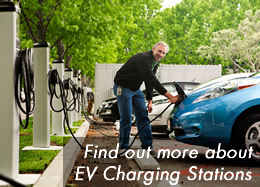
SCI-TECH | Firm sells 27 plug-in charging stations for hybrid vehicles, including at Northerly Island
Sandra Guy
June 20, 2009
It’s still a rare sight, but electric-hybrid cars and trucks will soon be revving up at a plug-in station at Northerly Island, the former site of Meigs Field.
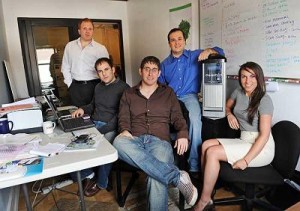
The charging station was sold to the Chicago Park District by local start-up company Carbon Day, which has the exclusive rights to distribute them in the Midwest, including at movie theaters, parking garages, office buildings and shopping malls (carbondayautomotive.com).
ABC7 Profiles Carbon Day
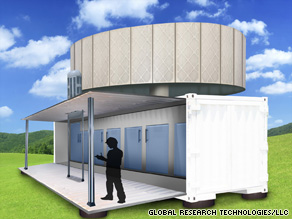
‘Synthetic tree’ claims to catch carbon in the air
Click for Article
- Story Highlights
- “Synthetic tree” would capture carbon dioxide in the air to reduce emissions
- Trapped carbon would be compressed to liquid C02 ready for sequestration
- Technology is being developed by scientists at Columbia University in the U.S.
- Broecker: “I think this is something that the world’s going to have to have”
LONDON, England (CNN) — Scientists in the United States are developing a “synthetic tree” capable of collecting carbon around 1,000 times faster than the real thing.
As the wind blows though plastic “leaves,” the carbon is trapped in a chamber, compressed and stored as liquid carbon dioxide.
The technology is similar to that used to capture carbon from flue stacks at coal-fired power plants, but the difference is that the “synthetic tree” can catch carbon anytime, anywhere.
Carbon Day will be celebrated statewide on Sept. 15
ILLINOIS GENERAL ASSEMBLY RESOLVES THAT CARBON DAY WILL BE CELEBRATED STATEWIDE ON SEPTEMBER 15th
The 96th General Assembly of the State of Illinois, has resolved that Carbon Day will be celebrated in Illinois, annually on September 15th. On this designated date, individuals, organizations, schools, and communities throughout the state will be urged to play a part in reducing the State’s carbon footprint by planting trees and organizing special programs to educate the people about simple steps that can be taken to reduce carbon emissions. The State of Illinois is dedicated to providing and preserving a healthy environment for the benefit of its citizens and for future generations.
Legislature sets first Carbon Day for September
CHICAGO – Carbon Day will be celebrated in Illinois on September 15, and organizers envision a day of tree planting, recycling and composting.
Illinois lawmakers formally recognized the event with a resolution making the day a state holiday.
Organizers say the day is meant to focus on the impact of greenhouse gases on the environment and raise public awareness about reducing use of fossil fuels.
They hope Carbon Day will become a national holiday.
A kickoff is being planned for Lincoln Park in Chicago. Organizers are looking for corporate partners.