
Obama: Now is time to pass climate change bill

June 25, 2009 by carbonday  
Filed under News

By H. JOSEF HEBERT and DINA CAPPIELLO

WASHINGTON (AP) — President Barack Obama is pressing again for passage of legislation that would confront the problem of global warming head-on.

Speaking in the Rose Garden of the White House, Obama said Washington must not miss the opportunity to work on cleaning the air and at the same time creating new “green” energy jobs. He called the measure “a jobs bill” and said the country for far too long has been too reliant on energy from fossil fuels.

The White House has seemed concerned that momentum for the bill is slipping away. Obama said “I know this is going to be a close vote because there is misinformation out there.” He spoke as House Democratic leaders scurried to line up enough votes to get the bill passed there, possibly as early as Friday.

Republicans largely oppose the bill before House members, arguing that it amounts to a massive energy tax.

READ MORE!

Power brokers for your car

June 23, 2009 by carbonday  
Filed under News

Click Photo for Article

Click Photo for Article

SCI-TECH | Firm sells 27 plug-in charging stations for hybrid vehicles, including at Northerly Island

Sandra Guy

June 20, 2009

It’s still a rare sight, but electric-hybrid cars and trucks will soon be revving up at a plug-in station at Northerly Island, the former site of Meigs Field.

The charging station was sold to the Chicago Park District by local start-up company Carbon Day, which has the exclusive rights to distribute them in the Midwest, including at movie theaters, parking garages, office buildings and shopping malls (carbondayautomotive.com).

CLICK FOR MORE!

ABC7 Profiles Carbon Day

June 23, 2009 by carbonday  
Filed under Media, News

abc7-on-cd

‘Synthetic tree’ claims to catch carbon in the air
June 22, 2009 by carbonday  
Filed under News

Click for Article

Click for Article

  • Story Highlights
  • “Synthetic tree” would capture carbon dioxide in the air to reduce emissions
  • Trapped carbon would be compressed to liquid C02 ready for sequestration
  • Technology is being developed by scientists at Columbia University in the U.S.
  • Broecker: “I think this is something that the world’s going to have to have”

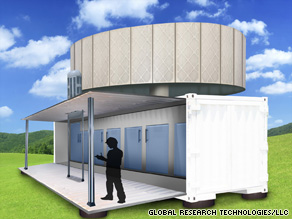
LONDON, England (CNN) — Scientists in the United States are developing a “synthetic tree” capable of collecting carbon around 1,000 times faster than the real thing.

As the wind blows though plastic “leaves,” the carbon is trapped in a chamber, compressed and stored as liquid carbon dioxide.

The technology is similar to that used to capture carbon from flue stacks at coal-fired power plants, but the difference is that the “synthetic tree” can catch carbon anytime, anywhere.

READ MORE!

Carbon Day will be celebrated statewide on Sept. 15

June 22, 2009 by carbonday  
Filed under News

ILLINOIS GENERAL ASSEMBLY RESOLVES THAT CARBON DAY WILL BE CELEBRATED STATEWIDE ON SEPTEMBER 15th

The 96th General Assembly of the State of Illinois, has resolved that Carbon Day will be celebrated in Illinois, annually on September 15th. On this designated date, individuals, organizations, schools, and communities throughout the state will be urged to play a part in reducing the State’s carbon footprint by planting trees and organizing special programs to educate the people about simple steps that can be taken to reduce carbon emissions. The State of Illinois is dedicated to providing and preserving a healthy environment for the benefit of its citizens and for future generations.

MORE!

Legislature sets first Carbon Day for September

June 22, 2009 by carbonday  
Filed under News

CHICAGO - Carbon Day will be celebrated in Illinois on September 15, and organizers envision a day of tree planting, recycling and composting.

Illinois lawmakers formally recognized the event with a resolution making the day a state holiday.

Organizers say the day is meant to focus on the impact of greenhouse gases on the environment and raise public awareness about reducing use of fossil fuels.

They hope Carbon Day will become a national holiday.

A kickoff is being planned for Lincoln Park in Chicago. Organizers are looking for corporate partners.

MORE!

Sept. 15 Is Carbon Day

June 15, 2009 by carbonday  
Filed under Featured, News

Celebrate Carbon Day on September 15th!

At Carbon Day we believe that everyone should “PLAY A PART” and work towards the goal of reducing each person’s carbon footprint.

Inevitably, when going about our daily lives — commuting, sheltering our families, eating — each of us contributes to the greenhouse gas emissions that are causing climate change.

There are many things each of us, as individuals and organizations, can do to reduce our carbon emissions.

The choices we make in our homes, offices, our travel, the food we eat, and what we buy and throw away all influence our carbon footprint and if we become conscious of these choices, we can help ensure a stable climate for future generations. We believe in sustainability and the benefits a sustainable world can bring.

September 15th has been designated as the official Carbon Day Holiday. This presents each of us with the opportunity to create an event, large and small, in our own community to educate one another about energy efficiency and how to reduce our individual and collective Carbon Footprint.

We will provide you with materials that will assist in planning and setting up your own Carbon Day Holiday event.  You can register your events in our database and show how you are Playing your Part.

If you would like additional information about Carbon Day Automotive, please view our website atwww.CarbonDayAutomotive.com Play a Part™ and Plug In!

Contact

Carbon Day Welcomes all comments and suggestions on how we can improve our message.

Please be patient as we try and answer the inquiries in the order that we receive them.

We are always looking for qualified and responsible individuals or groups who would like to sponser or hold an event on Carbon Day which is Sept 15.

Please direct all correspondence to the correct party listed below.

Events

Carbon Day Events or to volunteer in other ways
800 W. Huron suite 4E
Chicago, IL 60642

Phone: 312.275.5747
Fax: 312.276.4855
BenL@carbonday.com

CDA

Carbon Day Automotive - If you would like information on how to purchase an electric vehicle charging station or to become a qualified reseller.

800 W. Huron suite 4E
Chicago, IL 60642
ScottE@carbonday.com

For Media Requests please contact:

Jane Kaplan Communications
400 Park Avenue, Suite D
Highland Park, IL 60035
Phone–847.433.8594
Fax–847.433.8505
jane@jkaplancommunications.com

Tree Facts

  • Two mature trees provide enough oxygen for a family of four
  • One acre of trees removes 2.6 tons of CO2 per year
  • About one third of the United States of America is covered by forests
  • The average tree in an urban

Green Buildings

June 11, 2009 by carbonday  
Filed under News

Buildings account for one-sixth of the world’s fresh water withdrawals, one-quarter of its wood harvest, and two-fifths of its material and energy flows (Roodman and Lenssen, 1995).   “green” is an opportunity to use our resources efficiently while creating healthier buildings that improve human health, build a better environment, and provide cost savings.

What does it mean to Build Green?

A green building, also known as a sustainable building, is a structure that is designed, built, renovated, operated, or reused in an ecological and resource-efficient manner. Green buildings are designed to meet certain objectives such as protecting occupant health; improving employee productivity; using energy, water, and other resources more efficiently; and reducing the overall impact to the environment.

What Are the Economics of Green Buildings?

A green building may cost more up front, but saves through lower operating costs over the life of the building. The green building approach applies a project life cycle cost analysis for determining the appropriate up-front expenditure.  This analytical method calculates costs over the useful life of the asset.

These and other cost savings can only be fully realized when they are incorporated at the project’s conceptual design phase with the assistance of an integrated team of professionals. The integrated systems approach ensures that the building is designed as one system rather than a collection of stand-alone systems.

Some benefits, such as improving occupant health, comfort, productivity, reducing pollution and  landfill waste are not easily quantified. Consequently, they are not adequately considered in cost analysis. For this reason, consider setting aside a small portion of the building budget to cover differential costs associated with less tangible green building benefits or to cover the cost of researching and analyzing green building options.

Even with a tight budget, many green building measures can be incorporated with minimal or zero increased up-front costs and they can yield enormous  (Environmental Building News, 1999).

What Are the  of Green Buildings?

Below is a sampling of green building practices.

Preparing the site

* Start by selecting a site well suited to take advantage of mass transit.

* Protect and retain existing landscaping and natural features. Select plants that have low water and pesticide needs, and generate minimum plant trimmings. Use compost and mulches. This will save water and time.

* Recycled content paving materials, furnishings, and mulches help close the recycling loop.

Efficiency

Most buildings can reach energy efficiency levels far beyond California Title 24 standards, yet most only strive to meet the standard. It is reasonable to strive for 40 percent less energy than Title 24 standards. The following strategies contribute to this goal.

* Passive design strategies can dramatically affect building energy performance. These measures include building shape and orientation, passive solar design, and the use of natural lighting.

* Develop strategies to provide natural lighting. Studies have shown that it has a positive impact on productivity and well being.

* Install high-efficiency lighting systems with advanced lighting controls. Include motion sensors tied to dimmable lighting controls. Task lighting reduces general overhead light levels.

* Use a properly sized and energy-efficient heat/cooling system in conjunction with a thermally efficient building shell. Maximize light colors for roofing and wall finish materials; install high R-value wall and ceiling insulation; and use minimal glass on east and west exposures.

* Minimize the electric loads from lighting, equipment, and appliances.

* Consider alternative energy sources such as photovoltaics and fuel cells that are now available in new products and applications. Renewable energy sources provide a great symbol of emerging technologies for the future.

* Computer modeling is an extremely useful tool in optimizing design of electrical and mechanical systems and the building shell.

Efficiency

* Select sustainable construction materials and products by evaluating several characteristics such as reused and recycled content, zero or low off gassing of harmful air emissions, zero or low toxicity, sustainably harvested materials, high recyclability, durability, longevity, and local production.  Such products promote resource conservation and efficiency.  Using recycled-content products also helps develop markets for recycled materials that are being diverted from California’s landfills, as mandated by the Integrated Waste Management Act.

* Use dimensional planning and other material efficiency strategies.  These strategies reduce the amount of building materials needed and cut construction costs.   For example, design rooms on 4-foot multiples to conform to standard-sized wallboard and plywood sheets.

* Reuse and recycle construction and demolition materials.  For example, using inert demolition materials as a base course for a parking lot keeps materials out of landfills and costs less.

* Require plans for managing materials through deconstruction, demolition, and construction.

* Design with adequate space to facilitate recycling collection and to incorporate a solid waste management program that prevents waste generation.

Efficiency

* Design for dual plumbing to use recycled water for toilet flushing or a gray water system that recovers rainwater or other nonpotable water for site irrigation.

* Minimize wastewater by using ultra low-flush toilets, low-flow shower heads, and other water conserving fixtures.

* Use recirculating systems for centralized hot water distribution.

* Install point-of-use hot water heating systems for more distant locations.

* Use a water budget approach that schedules irrigation using the California Irrigation Management Information System data for landscaping.

* Meter the landscape separately from buildings. Use micro-irrigation (which excludes sprinklers and high-pressure sprayers) to supply water in nonturf areas.

* Use state-of-the-art irrigation controllers and self-closing nozzles on hoses.

Health and Safety

Recent studies reveal that buildings with good overall environmental quality can reduce the rate of respiratory disease, allergy, asthma, sick building symptoms, and enhance worker performance.  The potential financial benefits of improving indoor environments exceed costs by a of 8 and 14 (Fisk and Rosenfeld, 1998).

Choose construction materials and interior finish products with zero or low emissions to improve indoor air quality.  Many building materials and cleaning/maintenance products emit toxic gases, such as volatile organic compounds (VOC) and formaldehyde. These gases can have a detrimental impact on occupants’ health and productivity.

Provide adequate ventilation and a high-efficiency, in-duct filtration system. Heating and cooling systems that ensure adequate ventilation and proper filtration can have a dramatic and positive impact on indoor air quality.

Prevent indoor microbial contamination through selection of materials resistant to microbial growth, provide effective drainage from the roof and surrounding landscape, install adequate ventilation in bathrooms, allow proper drainage of air-conditioning coils, and design other building systems to control humidity.

Building  and Maintenance

Green building measures cannot achieve their goals unless they work as intended. Building commissioning includes testing and adjusting the mechanical, electrical, and plumbing systems to ensure that all equipment meets design criteria. It also includes instructing the staff on the operation and maintenance of equipment.

Over time, building performance can be assured through measurement, adjustment, and upgrading. Proper maintenance ensures that a building continues to perform as designed and commissioned.

.

to Ensure Success

* Establish a vision that embraces sustainable principles and an integrated design approach.

* Develop a clear statement of the project’s vision, goals, design criteria, and priorities.

* Develop a project budget that covers green building measures.  Allocate contingencies for additional research and analysis of specific options.  Seek sponsorship or grant opportunities.

* Seek advice of a design professional with green building experience.

* Select a design and construction team that is committed to the project vision. Modify the RFQ/RFP selection process to ensure the contractors have appropriate qualifications to identify, select, and implement an integrated system of green building measures.

* Develop a project schedule that allows for systems testing and commissioning.

* Develop contract plans and specifications to ensure that the building design is at a suitable level of building performance.

* Create effective incentives and oversight.

For  Information

* California Integrated Waste Management Board Green Building Web site (this site):www.ciwmb.ca.gov/GreenBuilding/. Includes the manual Designing With Vision: A Technical Manual For Material Choices In Sustainable Construction (Pub. #431-99-009). Hard copies are available from the publications clearinghouse at 1-800-CA-WASTE.

* Sustainable Building Technical Manual,http://www.sustainable.doe.gov/freshstart/articles/ptipub.htm

* A Guide to Irrigation Water Needs of Landscape Plants in California:www.dpla.water.ca.gov/urban/conservation/landscape/wucols/

* Department of Health Services, Indoor Air Quality Web site: www.cal-iaq.org

* U.S. Department of Energy Web site: www.sustainable.doe.gov/buildings/gbintro.shtml

* Environmental Building News: www.buildinggreen.com/

* U.S. Green Building Council Web site: www.usgbc.org

You may also order a hard copy of this publication from our catalog.

References

1. D.M  and N. Lenssen, A Building Revolution: How Ecology and Health Concerns are Transforming Construction, Worldwatch Paper 124, Worldwatch Institute, Washington, DC, March 1995, p. 5. (Back)

2. Environmental Building , Building Green on a Budget, Vol 8, No. 5, May 1999,  www.ebuild.com/Archives/Features/ Low_Cost/Low_Cost.html#General (Back)

3. William  and Arthur Rosenfeld, Potential Nationwide Improvements in Productivity and Health From Better Indoor Environments, Lawrence Berkeley National Laboratory, May 1998. (Back)

Green Construction

June 11, 2009 by carbonday  
Filed under Blog, News

Retro-Fit with Carbon Day

solar-canopy5

Carbon Day has partnered with Empact Developmentwhich is a full-service construction firm dedicated to

the construction of new buildings and retro-fit of existing buildings using environmentally friendly and sustainable materials which will help erase or neutralize any building’s carbon footprint. Our construction and retro-fit program will provide our clients a “Green” approach to operate their assets while benefiting from energy cost savings.

Green Construction has a vast impact on the natural environment, human health, and the economy. By adopting green building strategies, we can maximize both economic and environmental performance. Green construction methods can be integrated into buildings at any stage, from design and construction, to renovation and deconstruction. However, the most significant benefits can be obtained if the design and construction team takes an integrated approach from the earliest stages of a building project.

Green construction is Evidence of a growing trend toward green building design and sustainable living is springing up all over Chicago, we are here to take full advantage of all the opportunities out there. Empact Development has created strategic partnerships with LEED accredited architects, third party authorized certified agents in conjunction with the USGBC, interior designers, landscape architects, manufactures, suppliers, In house project managers, and infinite amount of insured and qualified contractors who only practice Green Construction. We also have a procurement arm for all recyclable and green material/furniture. Empact has hired a grant writing team for our clients to enjoy the tax credits and subsidies on a federal, state, and city level. So not only improve the quality of life for your home and or business, improve your bottom line and enjoy the benefits that are out there for going “GREEN”

Retro-Fit Benefits:

To Owners and Tenants:

  • Lower Utility Bills
  • Healthier living and work environment
  • Reduced Maintenance Cost
  • Increase Properties Appreciation
  • Increase Resale Value
  • Beneficial Mortgage Programs

To Local Municipality:

  • Strengthen community programs
  • Demonstrate Environmental Leadership
  • Preservation of Local Quality of Life

To Builders:

  • Lower Waist Removal Cost
  • Reduce amount of use of materials
  • Increased Marketing potential

To the Environment:

  • Greenhouse Gas Reduction
  • Improved Water Quality
  • Improved Air Quality
  • Decreased Carbon Footprint

Steps to Success

  • Establish a vision that embraces sustainable principles and an integrated design approach.
  • Develop a clear statement of the project’s vision, goals, design criteria, and priorities.
  • Develop a project budget that covers green building measures. Allocate contingencies for additional research and analysis of specific options.
  • Seek sponsorship or grant opportunities.
  • Seek advice of our design professional with green building experience and implement schematic drawings.
  • Select a design/build team that is committed to the project vision. Modify the RFQ/RFP selection process to ensure the contractors have appropriate qualifications to identify, select, and implement an integrated system of green building measures.
  • Develop a project schedule that allows for systems testing and commissioning.
  • Develop contract plans and specifications to ensure that the building design is at a suitable level of building performance.
  • Create effective incentives and oversight.

Green building measures cannot achieve their goals unless they work as intended. Building commissioning includes testing and adjusting the mechanical, electrical, and plumbing systems to ensure that all equipment meets design criteria. It also includes instructing the staff on the operation and maintenance of equipment. Over time, building performance can be assured through measurement, adjustment, and upgrading. Proper maintenance ensures that a building continues to perform as designed and commissioned.

  • Green Applications
  • Solar Applications
  • Wind Turbines
  • Energy efficient low wattage lighting and lighting design
  • Radiant heat
  • Tank-less on demand water heaters
  • Geo-Thermal Heating
  • Green Construction Options
  • Recyclable countertops
  • Water efficient plumbing fixtures
  • High efficiency, Star Rated HVAC systems
  • Recyclable insulation
  • LOW VOC paint
  • Sustainable flooring systems
  • Energy Star rated appliances

Please Contact

Elliot Offenbach

800 W Huron Suite 4E
Chicago, IL 60642

Direct: 847-977-9929
ElliotO@CarbonDay.com

Nissan’s $1.1 billion loan likely to be approved by DOE

May 28, 2009 by carbonday  
Filed under Blog, News

nissan-ev-drive-1280-14

The DOE loan that Nissan applied for to help it build electric cars and advanced batteries is likely to be approved for $1.1 billion, according to a report that cited “unidentified sources” in Kyodo News. The loan will probably speed up Nissan’s already fast-moving electric car program that is moving forward across the globe. Some of the U.S. city and state governments that are working with Nissan on EVs include Raleigh, Phoenix, Tucson, California; Tennessee; and Seattle. The DOE money would be used to upgrade the company’s Smyrna, Tenn., assembly plant and build a new facility for battery production.

The loan would come from the Advanced Technology Vehicle Manufacturing Incentive Program (AVTM) fund, a $25 billion pot that the DOE set aside to help automakers get more efficient vehicles to market. Green Car Advisor says that Nissan is also asking the Development Bank of Japan for another $1.1 billion loan and has already borrowed half that much from the Japanese government.

http://www.autobloggreen.com/2009/05/28/nissans-1-1-billion-loan-likely-to-be-approved-by-doe/

Next Page »

Tree Facts

• Two mature trees provide enough oxygen for a family of four.
• One acre of trees removes 2.6 tons of CO2 per year.
• About one third of the United States of America is covered by forests
• The average tree in an urban area has a life expectancy of only 8 years.
More ...